
The Most Holy Place: God's Throne
The Great Commission: Heaven\u0027s Discipleship Mandate • ~6 min read
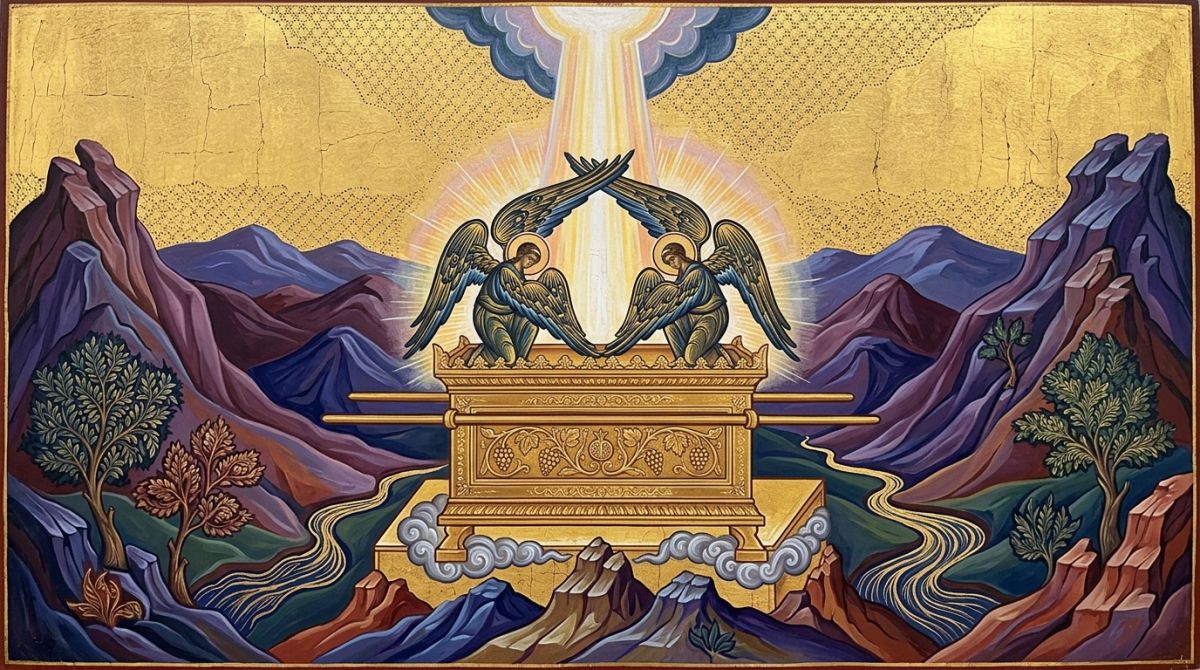
Welcome back to our study of God's dwelling place! Last time, we explored the Holy Place, understanding its furnishings and daily services. Today, we step into the most sacred chamber of the earthly sanctuary: the Most Holy Place. This innermost room was the very heart of God's dwelling among His people, representing His immediate presence and the throne of His law and grace. Understanding its design and purpose gives us profound insights into God's character and His incredible plan for our salvation.
The Veil: Separating the Sacred
As we approach the Most Holy Place, we first encounter a thick, intricately woven veil. This heavy curtain served as a critical barrier, signifying the profound holiness of God and the separation between Him and sinful humanity.
“And thou shalt hang up the vail under the taches, that thou mayest bring in thither within the vail the ark of the testimony: and the vail shall divide unto you between the holy place and the most holy.”
Exodus 26:33
“And thou shalt put the mercy seat upon the ark of the testimony in the most holy place.”
Exodus 26:34
This veil was not just a physical divider; it was a spiritual symbol. It showed that sinful human beings could not directly approach a holy God. This separation underscored the solemn truth that sin creates a chasm between us and our Creator. Only through a specific, divinely ordained pathway could God's presence be approached.
The Ark of the Covenant: God's Throne of Law
Within the Most Holy Place stood the Ark of the Covenant, the central and most sacred piece of furniture in the entire sanctuary. It was a chest made of acacia wood, overlaid with pure gold, and it held the very foundation of God's government.
“And they shall make an ark of shittim wood: two cubits and a half shall be the length thereof, and a cubit and a half the breadth thereof, and a cubit and a half the height thereof. And thou shalt overlay it with pure gold, within and without shalt thou overlay it, and shalt make upon it a crown of gold round about.”
Exodus 25:10-11
What was inside this sacred chest? The Bible tells us its primary contents:
“And thou shalt put into the ark the testimony which I shall give thee.”
Exodus 25:16
This "testimony" refers specifically to the Ten Commandments, the moral law written by God's own finger on two tables of stone.
“And he wrote on the tables, according to the first writing, the ten commandments, which the Lord spake unto you in the mount out of the midst of the fire in the day of the assembly: and the Lord gave them unto me. And I turned myself and came down from the mount, and put the tables in the ark which I had made; and there they be, as the Lord commanded me.”
Deuteronomy 10:4-5
The Ark, containing God's unchanging law, represented the very foundation of His throne. It declared that God's government is based on righteousness and truth. His law is a transcript of His character—holy, just, and good (Romans 7:12).
The Mercy Seat: God's Throne of Grace
Above the Ark, forming its lid, was the Mercy Seat, also made of pure gold. On either end of the Mercy Seat were two cherubim, golden figures with wings outstretched, facing inward and looking down upon the Mercy Seat.
“And thou shalt make a mercy seat of pure gold: two cubits and a half shall be the length thereof, and a cubit and a half the breadth thereof. And thou shalt make two cherubims of gold, of beaten work shalt thou make them, in the two ends of the mercy seat. And make one cherub on the one end, and the other cherub on the other end: even of the mercy seat shall ye make the cherubims on the two ends thereof. And the cherubims shall stretch forth their wings on high, covering the mercy seat with their wings, and their faces shall look one to another; toward the mercy seat shall the faces of the cherubims be. And thou shalt put the mercy seat above upon the ark; and in the ark thou shalt put the testimony that I shall give thee.”
Exodus 25:17-21
The Mercy Seat was the place where God's presence manifested in a special way. It was from between the cherubim, above the Mercy Seat, that God promised to meet with His people.
“And there I will meet with thee, and I will commune with thee from above the mercy seat, from between the two cherubims which are upon the ark of the testimony, of all things which I will give thee in commandment unto the children of Israel.”
Exodus 25:22
This is where justice (represented by the law in the Ark) and mercy (represented by the blood sprinkled on the Mercy Seat on the Day of Atonement) met. The cherubim, often associated with God's presence and holiness (Genesis 3:24, Ezekiel 10:1-2), gazed upon the place where atonement was made.
The Day of Atonement: A Solemn Entrance
Access to the Most Holy Place was incredibly restricted. Only one person could enter, and only once a year: the High Priest, on the solemn Day of Atonement (Yom Kippur). This annual service was crucial for the cleansing of the sanctuary and the people from their sins.
“But into the second went the high priest alone once every year, not without blood, which he offered for himself, and for the errors of the people:”
Hebrews 9:7
The High Priest entered with the blood of a sin offering, which he sprinkled on and before the Mercy Seat. This act symbolized the covering of sin and the reconciliation between a holy God and His sinful people.
“And he shall take of the blood of the bullock, and sprinkle it with his finger upon the mercy seat eastward; and before the mercy seat shall he sprinkle of the blood with his finger seven times. Then shall he kill the goat of the sin offering, that is for the people, and bring his blood within the vail, and do with that blood as he did with the blood of the bullock, and sprinkle it upon the mercy seat, and before the mercy seat:”
Leviticus 16:14-15
This annual service powerfully illustrated that sin required a blood sacrifice, and that God, in His great mercy, provided a way for sins to be atoned for and removed.
Conclusion: God's Throne of Law and Grace
The Most Holy Place, with its Ark of the Covenant and Mercy Seat, was more than just a sacred room; it was a profound visual sermon about God's character and His plan of salvation. It revealed a God whose throne is founded on righteousness (His law) yet who extends boundless grace and mercy through the shedding of blood for the atonement of sins. It pointed forward to a greater High Priest and a final atonement that would remove the veil forever.
Reflection Questions:
- What does the thick veil separating the Holy Place from the Most Holy Place teach us about God's holiness and humanity's sinful condition?
- The Ark contained God's Ten Commandments. How does this emphasize the importance of God's law to His character and government? (See also Psalm 89:14)
- The Mercy Seat was above the Ark of the Law. What profound truth about God's character is revealed by the coexistence of His righteous law and His mercy?
- Why was it so significant that only the High Priest could enter the Most Holy Place, and only once a year, with blood? (Consider Hebrews 9:22)