
The Holy Place: Daily Ministry
The Great Commission: Heaven\u0027s Discipleship Mandate • ~6 min read
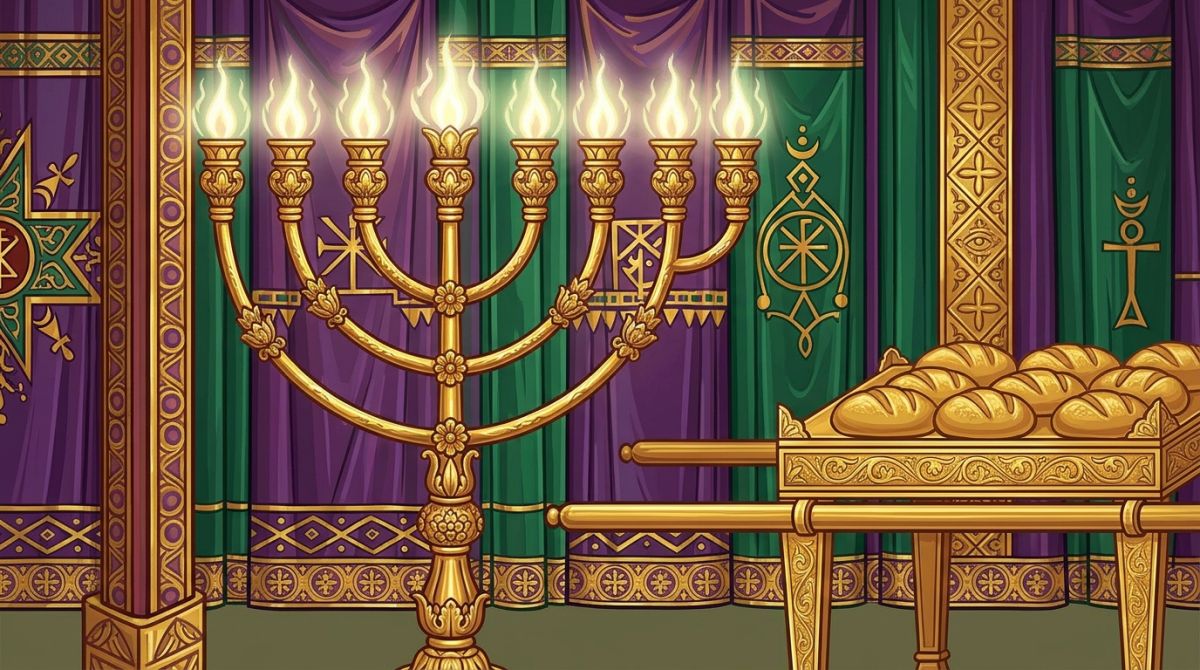
Welcome back, dear friends, as we continue our journey into the fascinating study of God's dwelling place! Last time, we explored the outer court, where the altar of sacrifice and the laver pointed us to the crucial steps of repentance and cleansing. Today, we step deeper into the sanctuary, moving past the first veil into the Holy Place. This second apartment of the earthly sanctuary was a place of daily ministry, a vibrant symbol of ongoing communion with God and His continuous provision for His people. As we examine its furnishings and service, we'll discover profound truths about Christ's work for us and our daily walk of faith.
The Holy Place was separated from the Most Holy Place by a magnificent veil, a powerful symbol we'll explore in future lessons. But for now, let's understand its placement and purpose.
And thou shalt hang up the vail under the taches, that thou mayest bring in thither within the vail the ark of the testimony: and the vail shall be unto you a separation between the holy place and the most holy.
Exodus 26:33
This verse highlights the distinct separation between the two inner apartments. Only the high priest could enter the Most Holy Place, and that only once a year. However, the priests entered the Holy Place daily, performing their sacred duties:
Now when these things were thus ordained, the priests went always into the first tabernacle, accomplishing the service of God.
Hebrews 9:6
The "first tabernacle" here refers to the Holy Place. This daily service reminds us of the constant need for God's presence and provision in our lives. Let's look at the three main articles of furniture found in this sacred apartment.
The Golden Candlestick: The Light of God's Presence
As a priest entered the Holy Place, the first thing he would notice was the brilliant light emanating from the Golden Candlestick, also known as the Menorah.
And thou shalt make a candlestick of pure gold: of beaten work shall the candlestick be made: his shaft, and his branches, his bowls, his knops, and his flowers, shall be of the same. And six branches shall come out of the sides of it; three branches of the candlestick out of the one side, and three branches of the candlestick out of the other side... And thou shalt make the seven lamps thereof: and they shall light the lamps thereof, that they may give light over against it.
Exodus 25:31-32, 37
This elaborate Candlestick, made of pure gold, was the only source of light in the Holy Place. It burned continually, symbolizing God's perpetual presence and His desire to illuminate our path. Just as the sanctuary needed constant light, we need the constant light of God's truth in our lives. Jesus declared:
Then spake Jesus again unto them, saying, I am the light of the world: he that followeth me shall not walk in darkness, but shall have the light of life.
John 8:12
The Word of God also serves as a light for our journey:
Thy word is a lamp unto my feet, and a light unto my path.
Psalm 119:105
The Candlestick represents the divine light that God provides through Christ and His Word, guiding us and revealing truth in our daily experience.
The Table of Shewbread: Sustenance for Our Journey
Across from the Candlestick stood the Table of Shewbread.
Thou shalt also make a table of shittim wood: two cubits shall be the length thereof, and a cubit the breadth thereof, and a cubit and a half the height thereof. And thou shalt overlay it with pure gold, and make thereto a crown of gold round about. And thou shalt set upon the table shewbread before me alway.
Exodus 25:23-24, 30
Twelve loaves of unleavened bread were placed on this table each Sabbath, symbolizing the twelve tribes of Israel and God's constant provision for His people. This "bread of presence" was a reminder that God sustains us spiritually and physically. Jesus, again, points us to a deeper truth:
And Jesus said unto them, I am the bread of life: he that cometh to me shall never hunger; and he that believeth on me shall never thirst.
John 6:35
Just as the priests partook of the shewbread, we are invited to partake of Christ, the living bread, for our spiritual nourishment and strength, ensuring we are sustained for our journey of faith.
The Altar of Incense: Our Prayers Ascending to God
Before the veil, directly in front of the Most Holy Place, stood the Altar of Incense.
And thou shalt make an altar to burn incense upon: of shittim wood shalt thou make it... And Aaron shall burn thereon sweet incense every morning: when he dresseth the lamps, he shall burn incense upon it. And when Aaron lighteth the lamps at even, he shall burn incense upon it, a perpetual incense before the LORD throughout your generations.
Exodus 30:1, 7-8
The fragrant smoke of the incense ascended day and night, symbolizing the prayers of God's people rising to Him. This daily offering was a powerful reminder that God desires constant communion with us. The psalmist understood this connection:
Let my prayer be set forth before thee as incense; and the lifting up of my hands as the evening sacrifice.
Psalm 141:2
In heaven, we see a similar scene, with incense symbolizing the prayers of the saints:
And another angel came and stood at the altar, having a golden censer; and there was given unto him much incense, that he should offer it with the prayers of all saints upon the golden altar which was before the throne. And the smoke of the incense, which came with the prayers of the saints, ascended up before God out of the angel's hand.
Revelation 8:3-4
The Altar of Incense reminds us of the importance of prayer and how, through Christ, our prayers are made acceptable before God. He is our great High Priest, interceding for us:
Wherefore he is able also to save them to the uttermost that come unto God by him, seeing he ever liveth to make intercession for them.
Hebrews 7:25
The Holy Place, with its daily ministry, paints a beautiful picture of our ongoing relationship with God. The light of the Candlestick reminds us that Christ and His Word illuminate our path. The Table of Shewbread assures us of His constant spiritual nourishment. And the Altar of Incense encourages us to bring our prayers before Him, knowing that through Christ, they ascend as a sweet aroma. This daily service in the earthly sanctuary was a blueprint, revealing God's desire for constant communion with His people and foreshadowing the continuous, intercessory ministry of our High Priest, Jesus Christ, in the heavenly sanctuary.
Reflection Questions:
- How does the continuous burning of the Golden Candlestick encourage you about God's perpetual presence and guidance in your life?
- In what practical ways do you "partake" of Jesus as the "Bread of Life" for your spiritual nourishment each day?
- Considering the Altar of Incense, how does knowing that Christ intercedes for you affect your confidence and consistency in prayer?
- The priests ministered daily in the Holy Place. What does this daily ministry symbolize about our own need for consistent spiritual connection and communion with God?