
Meeting Needs, Building Bridges: Compassion as Discipleship
The Great Commission: Heaven\u0027s Discipleship Mandate • ~7 min read
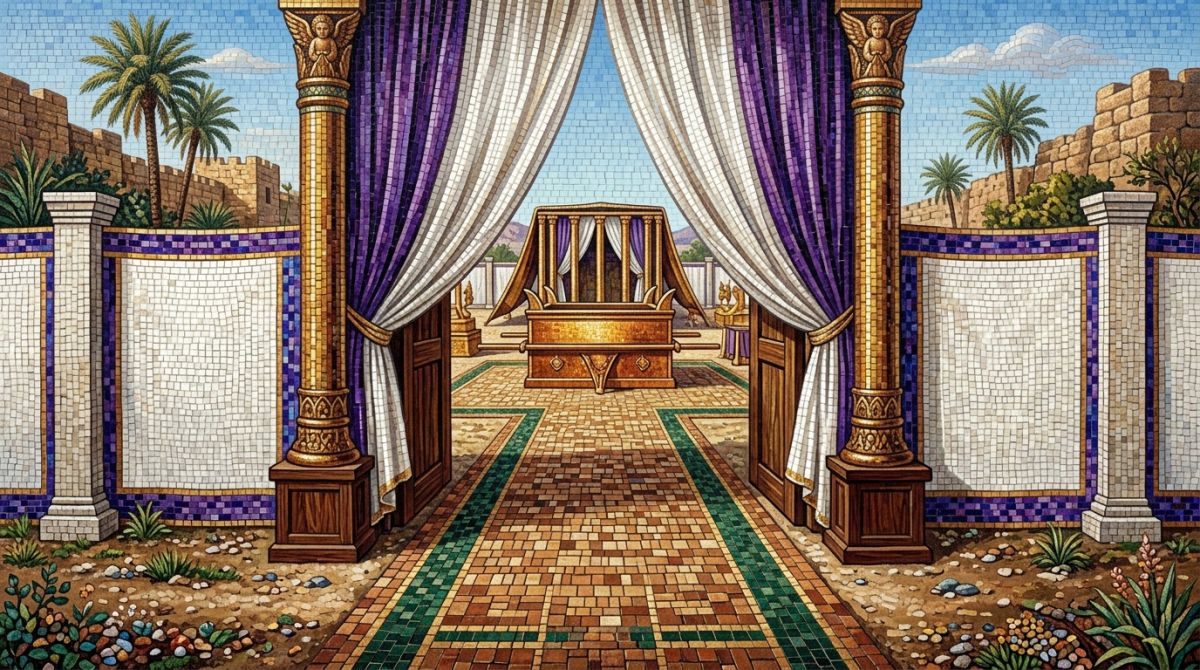
Chapter 2: The Earthly Sanctuary: A Blueprint of Salvation
The Courtyard: Access to God
Welcome back to our study of God's dwelling place! Last time, we began to explore the profound significance of the earthly sanctuary. Today, we step into the courtyard, the very first area of the sanctuary that an Israelite would encounter. This outer court, with its specific design and furnishings, was not merely a physical space; it was a powerful visual aid, a living parable that taught crucial lessons about humanity's access to God and the initial steps of salvation. Let's open our Bibles and discover what God wants to reveal to us through this sacred space.
The Courtyard Walls: Set Apart for God
Our journey into the courtyard begins with its boundaries. The Lord gave very specific instructions for its construction:
And thou shalt make the court of the tabernacle: for the south side southward there shall be hangings for the court of fine twined linen of an hundred cubits long for one side: And the twenty pillars thereof and their twenty sockets shall be of brass; the hooks of the pillars and their fillets shall be of silver. And likewise for the north side in length there shall be hangings of an hundred cubits long, and her twenty pillars and their twenty sockets of brass; the hooks of the pillars and their fillets of silver. And for the breadth of the court on the west side shall be hangings of fifty cubits: their pillars ten, and their sockets ten. And the breadth of the court on the east side eastward shall be fifty cubits. The hangings of the court round about shall be of an hundred cubits long: and the height five cubits of fine twined linen, and their sockets of brass. All the pillars round about the court shall be filleted with silver; their hooks shall be of silver, and their sockets of brass. The length of the court shall be an hundred cubits, and the breadth fifty every where, and the height five cubits of fine twined linen, and their sockets of brass.
Exodus 27:9-13, 18 KJV
Imagine standing before these towering walls of fine white linen, five cubits (about 7.5 feet) high. These walls effectively shut out the surrounding world, creating a distinct boundary between the common and the sacred. This separation was a constant reminder that God is holy, and His presence demands reverence and a setting apart from the defilements of the world. The pure white linen symbolized purity and righteousness, a stark contrast to the sinful nature of humanity. It taught the worshiper that to approach God, one must be set apart from sin.
The Gate: The Only Way
While the walls created separation, there was also a single, prominent entrance on the east side:
And for the gate of the court shall be an hanging of twenty cubits, of blue, and purple, and scarlet, and fine twined linen, wrought with needlework: and their pillars shall be four, and their sockets four.
Exodus 27:16 KJV
There was only one gate, not multiple entrances. This single gate beautifully illustrates a profound truth about salvation: there is only one way to God. Jesus Himself declared this truth:
I am the door: by me if any man enter in, he shall be saved, and shall go in and out, and find pasture.
John 10:9 KJV
The gate, with its vibrant colors of blue, purple, and scarlet, pointed directly to Jesus Christ. Blue represents heavenly royalty, purple His kingship, and scarlet His sacrifice. Just as the Israelite could only enter the courtyard through this one gate, so too can we only enter into a relationship with God through Jesus Christ, our Savior and Lord.
The Altar of Burnt Offering: The Sacrifice for Sin
Upon entering the courtyard, the very first object a worshiper would see was the brazen altar:
And thou shalt make an altar of shittim wood, five cubits long, and five cubits broad; the altar shall be foursquare: and the height thereof shall be three cubits. And thou shalt make the horns of it upon the four corners thereof: his horns shall be of the same: and thou shalt overlay it with brass.
Exodus 27:1-2 KJV
This altar was where animal sacrifices were offered daily for the sins of the people. It was a place of death, where innocent blood was shed. This act was a solemn reminder of the consequences of sin and the principle that "without shedding of blood is no remission" (Hebrews 9:22). The animal's life was given in place of the sinner's life, foreshadowing the ultimate sacrifice.
The altar of burnt offering pointed forward to the cross of Calvary, where Jesus Christ, the spotless Lamb of God, offered Himself as the perfect, once-for-all sacrifice for the sins of the world. His death provides atonement, reconciliation, and forgiveness for all who believe.
But God commendeth his love toward us, in that, while we were yet sinners, Christ died for us.
Romans 5:8 KJV
The altar teaches us that our access to God is not earned, but granted through the shed blood of a substitute.
The Laver: Cleansing and Purity
Beyond the altar, but still within the courtyard, stood the laver:
Thou shalt also make a laver of brass, and his foot also of brass, to wash withal: and thou shalt put it between the tabernacle of the congregation and the altar, and thou shalt put water therein. For Aaron and his sons shall wash their hands and their feet thereat: When they go into the tabernacle of the congregation, they shall wash with water, that they die not; or when they come near to the altar to minister, to burn offering made by fire unto the LORD: So they shall wash their hands and their feet, that they die not: and it shall be a statute for ever to them, even to him and to his seed throughout their generations.
Exodus 30:18-21 KJV
The priests had to wash their hands and feet at the laver before ministering at the altar or entering the Holy Place. This washing symbolized the necessity of spiritual cleansing and purification after the acceptance of the sacrifice. It represents repentance and turning away from sin, a daily commitment to a clean life.
Just as the priests needed to wash to perform their duties, we too need spiritual cleansing. This is not about earning salvation, but about living a life pleasing to God once we have accepted Christ's sacrifice. It signifies the transforming power of the Holy Spirit in our lives, cleansing us from sin and preparing us for service.
Not by works of righteousness which we have done, but according to his mercy he saved us, by the washing of regeneration, and renewing of the Holy Ghost;
Titus 3:5 KJV
And if we stumble, God provides for our cleansing:
If we confess our sins, he is faithful and just to forgive us our sins, and to cleanse us from all unrighteousness.
1 John 1:9 KJV
Conclusion: The First Steps of Salvation
The courtyard of the earthly sanctuary paints a clear picture of the initial steps in our journey of salvation. The white linen walls remind us of God's holiness and our need to be set apart. The single gate points to Jesus Christ as the only way to the Father. The altar of burnt offering shows us that forgiveness and atonement come through His sacrificial death. And the laver emphasizes the essential need for spiritual cleansing, repentance, and purity in our lives as we walk with God. Each element in the courtyard directs our gaze to the Lamb of God, who takes away the sin of the world, offering us full and free access to our Creator.
Reflection Questions:
- How do the white linen walls of the courtyard inform your understanding of God's character and your approach to Him?
- Considering John 10:9 and the single gate, what does it mean to truly believe that Jesus is the "only door" to salvation?
- The altar of burnt offering required a sacrifice. What personal meaning do you draw from Christ's sacrifice on the cross as foreshadowed by this altar?
- The laver required daily washing for the priests. What "daily washing" or cleansing do you seek from God in your own life, and how does 1 John 1:9 apply?