
The Three Angels\u0027 Messages: A Present-Truth Call to Discipleship
The Great Commission: Heaven\u0027s Discipleship Mandate • ~6 min read
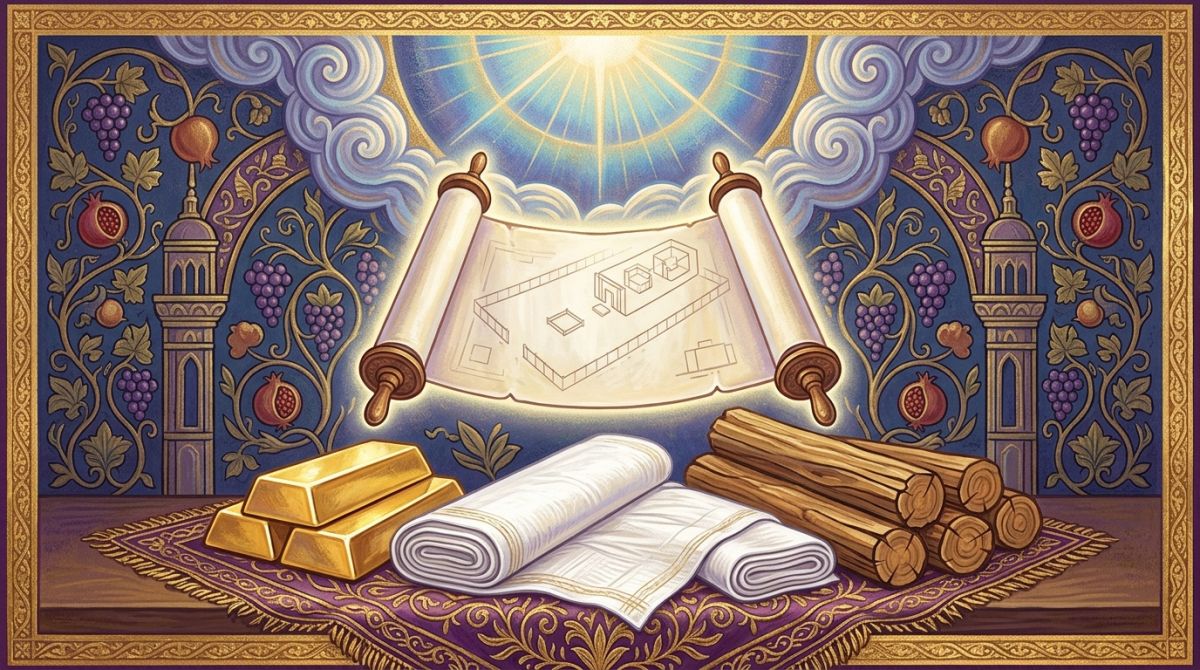
God's Dwelling Place: Understanding the Sanctuary Message
Chapter 2: The Earthly Sanctuary: A Blueprint of Salvation
Lesson: God's Command and Design
Welcome back to our study of God's dwelling place! Last time, we began to explore the profound significance of the sanctuary. Today, we're diving deeper into the very beginning of its construction here on earth. We'll discover that the earthly sanctuary wasn't just a random building, but a divinely inspired structure, a detailed blueprint given by God Himself. Understanding its origins and design helps us grasp its ultimate purpose: revealing God's plan for our salvation.
A Divine Command
The story of the sanctuary begins with a direct command from God to Moses on Mount Sinai. After delivering the Ten Commandments and establishing His covenant with Israel, God immediately turned their attention to building a place where He could dwell among them. This wasn't an optional project, but a central part of their relationship with Him.
Exodus 25:8-9 (KJV): "And let them make me a sanctuary; that I may dwell among them. According to all that I shew thee, after the pattern of the tabernacle, and the pattern of all the instruments thereof, even so shall ye make it."
Notice the two key phrases here: "that I may dwell among them" and "after the pattern." God desired to be intimately present with His people. He didn't want to be a distant deity, but a God who walked and talked with them. And this dwelling place was to be built with absolute precision, following a specific "pattern" that He would reveal.
Exodus 25:40 (KJV): "And look that thou make them after their pattern, which was shewed thee in the mount."
This command is repeated, emphasizing the importance of adhering to the divine design. This was not a human invention; it was God's own plan for how He would meet with humanity.
The Heavenly Original
What was this "pattern" that Moses was shown? The Bible makes it clear that the earthly sanctuary was not an original design, but a copy, a shadow of something far greater and more enduring. It was a representation of a heavenly reality.
Hebrews 8:5 (KJV): "Who serve unto the example and shadow of heavenly things, as Moses was admonished of God when he was about to make the tabernacle: for, See, saith he, that thou make all things according to the pattern shewed to thee in the mount."
The author of Hebrews explicitly states that the priests serving in the earthly sanctuary were ministering in a place that was merely an "example and shadow of heavenly things." This means that the earthly sanctuary, with all its intricate details, pointed to a grander, spiritual reality in heaven itself. It was a tangible object lesson, designed to teach profound truths about God's character and His plan for salvation.
Hebrews 9:23-24 (KJV): "It was therefore necessary that the patterns of things in the heavens should be purified with these; but the heavenly things themselves with better sacrifices than these. For Christ is not entered into the holy places made with hands, which are the figures of the true; but into heaven itself, now to appear in the presence of God for us."
Here, we see the clear distinction between the "holy places made with hands" (the earthly sanctuary) and "heaven itself." The earthly sanctuary was a "figure of the true." Every detail, every piece of furniture, every service, was meant to illustrate principles that found their ultimate fulfillment in heaven, and especially in the ministry of Jesus Christ.
Details of the Divine Design
God didn't just give a vague instruction; He provided incredibly specific and detailed blueprints for every aspect of the sanctuary. From the materials to the dimensions, nothing was left to human discretion.
Exodus 26:30 (KJV): "And thou shalt rear up the tabernacle according to the fashion thereof which was shewed thee in the mount."
This repetition underscores the importance of precision. Consider the exact specifications for the Ark of the Covenant, the altar, the candlesticks, and even the curtains:
Exodus 25:10 (KJV): "And they shall make an ark of shittim wood: two cubits and a half shall be the length thereof, and a cubit and a half the breadth thereof, and a cubit and a half the height thereof."
Exodus 27:1 (KJV): "And thou shalt make an altar of shittim wood, five cubits long, and five cubits broad; the altar shall be foursquare: and the height thereof shall be three cubits."
Exodus 25:31 (KJV): "And thou shalt make a candlestick of pure gold: of beaten work shall the candlestick be made: his shaft, and his branches, his bowls, his knops, and his flowers, shall be of the same."
These meticulous instructions reveal God's desire for order, beauty, and symbolism. Each element had a specific purpose and represented a spiritual truth. For instance, the gold represented divinity, the shittim wood represented humanity, and their combination in the Ark of the Covenant pointed to the divine-human nature of Christ.
The fact that God commanded such specific details tells us that every part of the sanctuary has a lesson for us. It's not just ancient history; it's a living blueprint for understanding God's character and His method of saving us.
Why Such Precision?
Why did God insist on such exactness? It wasn't merely for aesthetic reasons. The precision served several crucial purposes:
- To ensure accurate representation: Since it was a copy of a heavenly original, it had to be built precisely to convey the true meaning of the heavenly reality.
- To prevent human error and innovation: God wanted His plan to be understood exactly as He intended, without human ideas or traditions distorting the message.
- To demonstrate God's sovereignty and wisdom: The intricate design showcased God's perfect planning and His ability to provide a complete solution for sin.
- To teach profound theological truths: Every piece of furniture, every material, every sacrifice was rich with symbolic meaning, pointing forward to the work of the Messiah.
1 Chronicles 28:19 (KJV): "All this, said David, the LORD made me understand in writing by his hand upon me, even all the works of this pattern."
Even centuries later, when David was given instructions for the Temple, the principle of divine design was upheld. God Himself was the architect, and His plans were to be followed faithfully.
Reflection Questions:
- What does God's desire to "dwell among them" (Exodus 25:8) tell you about His character?
- How does the idea of the earthly sanctuary being a "shadow of heavenly things" (Hebrews 8:5) impact your understanding of worship and spiritual reality?
- Why do you think God was so meticulous in His instructions for the sanctuary's construction? What does this teach us about studying His Word?
- Can you think of ways that people today might try to "improve" on God's patterns or plans in their spiritual lives or worship?
Conclusion
The earthly sanctuary, built by divine command and according to a heavenly pattern, stands as a profound testament to God's love and His meticulous plan for salvation. It wasn't a structure of human ingenuity, but a divine blueprint, carefully laid out to reveal the grand truths of the gospel. As we continue to explore its various parts and services, remember that we are studying not just an ancient building, but God's own visual aid, designed to help us understand the incredible work He has done, and is doing, to save us. In the coming lessons, we will uncover the rich symbolism embedded in each detail, drawing us closer to the heart of God's redemptive plan.