
Confession and Atonement
The Sacrifices: Pointing to Christ • ~6 min read
Confession and Atonement
Welcome back, dear friends, as we continue our journey into the profound truths of God's sanctuary message. Last time, we began to explore the sacrificial system, seeing how each detail pointed to the coming Messiah. Today, we're going to focus on a crucial aspect of these ancient rituals: the act of confession and the promise of atonement. We'll see how the transfer of sin to the sacrifice beautifully prefigured Christ bearing our sins and providing the ultimate propitiation for us. Let's open our hearts and minds to God's Word.
The Burden of Sin and the Act of Confession
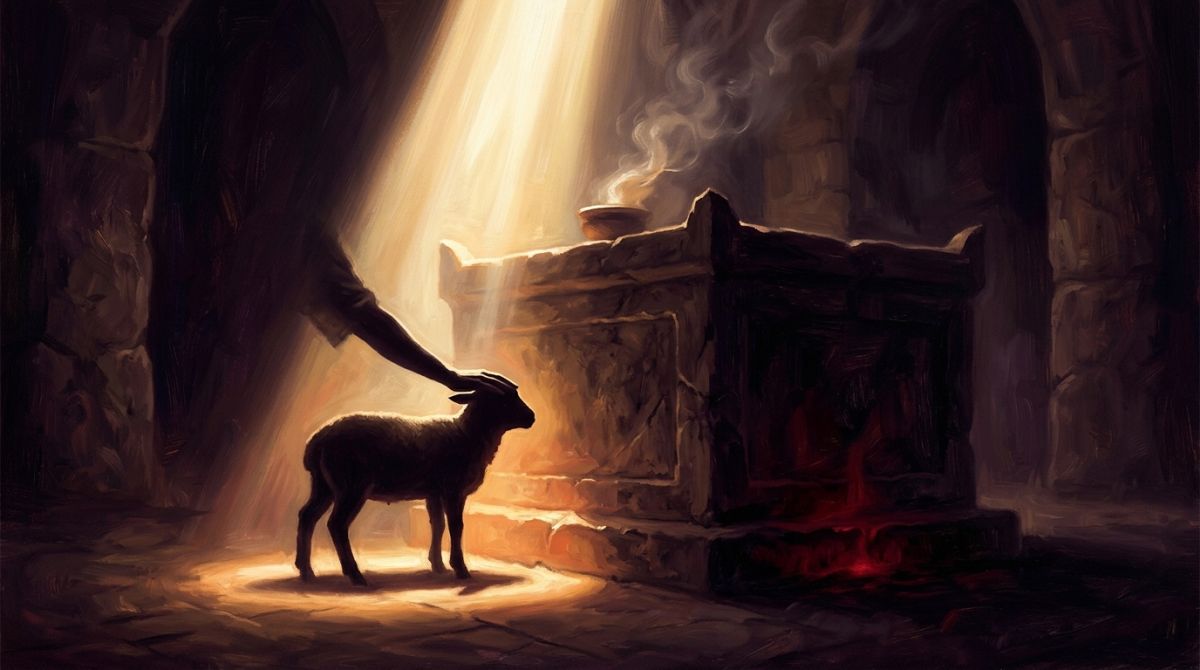
Imagine the Israelite, burdened by sin, bringing their offering to the tabernacle. This wasn't just a casual act; it was a deeply personal and solemn moment. The first step in seeking forgiveness was acknowledging their transgression. The Bible describes this process clearly:
And he shall lay his hand upon the head of the sin offering, and slay it for a sin offering in the place where they kill the burnt offering.
Leviticus 4:29
The laying on of hands was more than just a physical gesture. In the context of the sanctuary service, it symbolized the transfer of sin. As the worshiper placed their hands upon the head of the innocent animal, their confessed sins were symbolically transferred to the sacrifice. This act acknowledged personal guilt and the need for a substitute. It wasn't enough to simply bring an animal; the individual had to personally identify with the sacrifice, confessing their wrongdoing.
If a soul shall sin through ignorance against any of the commandments of the LORD concerning things which ought not to be done, and shall do against any of them: If the priest that is anointed do sin according to the sin of the people; then let him bring for his sin, which he hath sinned, a young bullock without blemish unto the LORD for a sin offering.
Leviticus 4:2-3
Even sins committed in ignorance required atonement, highlighting the pervasive nature of sin and God's absolute holiness. The act of confession was a humble admission that one had fallen short of God's perfect standard.
The Substitute Bearing Our Sins
The animal, now bearing the confessed sins, was then slain. This innocent life was given in place of the sinner's life. This entire ritual powerfully pointed forward to the ultimate sacrifice, Jesus Christ. He didn't just die *for* us; He died *as* us, bearing our sins.
For he hath made him to be sin for us, who knew no sin; that we might be made the righteousness of God in him.
2 Corinthians 5:21
Just as the sins were symbolically transferred to the animal, our sins were literally laid upon Jesus on the cross. He became our substitute, taking upon Himself the penalty we deserved. This is the heart of the gospel and the profound meaning behind the sanctuary sacrifices.
All we like sheep have gone astray; we have turned every one to his own way; and the LORD hath laid on him the iniquity of us all.
Isaiah 53:6
Isaiah's prophecy beautifully articulates this transfer, showing that God Himself ordained that the "iniquity of us all" would be laid upon the Messiah. This act of divine substitution is the foundation of our hope.
Propitiation: God's Provision for Atonement
The concept of atonement in the sanctuary system found its ultimate fulfillment in Christ's death as an act of propitiation. Propitiation means that God, in His infinite love and justice, provided a way to satisfy the demands of His holy law and reconcile us to Himself. It's not about appeasing an angry God, but about God Himself providing the means for our salvation.
Whom God hath set forth to be a propitiation through faith in his blood, to declare his righteousness for the remission of sins that are past, through the forbearance of God;
Romans 3:25
Here, the apostle Paul clearly states that God presented Jesus as the propitiation. Through His blood—His sacrificial death—our sins are remitted. This means that through Christ, God's righteous requirements were met, and a way was opened for forgiveness and reconciliation. The sacrifices in the sanctuary were a shadow, but Christ is the substance.
And he is the propitiation for our sins: and not for ours only, but also for the sins of the whole world.
1 John 2:2
This verse expands on the scope of Christ's propitiation, reminding us that His sacrifice is sufficient for all humanity. His death was a universal provision, making atonement available to everyone who believes.
Herein is love, not that we loved God, but that he loved us, and sent his Son to be the propitiation for our sins.
1 John 4:10
This powerful declaration highlights that propitiation is an act of God's boundless love. It originated with Him, not with us. He took the initiative to bridge the chasm created by sin.
Our Response: Faith and Confession
Just as the Israelite had to confess their sin and bring their sacrifice, we too are called to confess our sins and place our faith in the ultimate sacrifice of Jesus. The sanctuary system taught them the principle; we live in the reality.
If we confess our sins, he is faithful and just to forgive us our sins, and to cleanse us from all unrighteousness.
1 John 1:9
This promise echoes the ancient ritual, assuring us that when we confess, God is faithful to forgive because of the propitiation Christ has made. Our confession is met with His cleansing power.
For with the heart man believeth unto righteousness; and with the mouth confession is made unto salvation.
Romans 10:10
Confession is not just admitting guilt; it's also acknowledging Jesus as our Savior and Lord. It's a public and personal declaration of our faith in His atoning work.
Conclusion
The ancient sanctuary sacrifices, with their solemn act of confession and the symbolic transfer of sin, were profound object lessons. They meticulously pointed forward to Jesus Christ, the Lamb of God, who would truly bear our sins. His death on the cross was the ultimate propitiation, satisfying the demands of justice and demonstrating God's incredible love. Because of Him, we can confess our sins with confidence, knowing that we have a faithful and just God who forgives and cleanses us through the blood of His Son. What a glorious truth!
Reflection Questions
- How does the act of laying hands on the sacrifice (Leviticus 4:29) deepen your understanding of Christ bearing our sins?
- Read 2 Corinthians 5:21 again. What does it mean for Christ to be "made sin for us"? How does this connect to the sanctuary sacrifices?
- Romans 3:25 speaks of Christ as "a propitiation through faith in his blood." What does "propitiation" mean to you in the context of God's character and our salvation?
- Considering 1 John 1:9, how does understanding Christ as our propitiation encourage you to confess your sins regularly?
- How does this lesson inspire you to appreciate the depth of God's love and the completeness of Christ's sacrifice?