
When Prayer Feels Hard: Doubt, Distraction, and Dry Seasons
Overcoming Obstacles in Prayer • ~6 min read
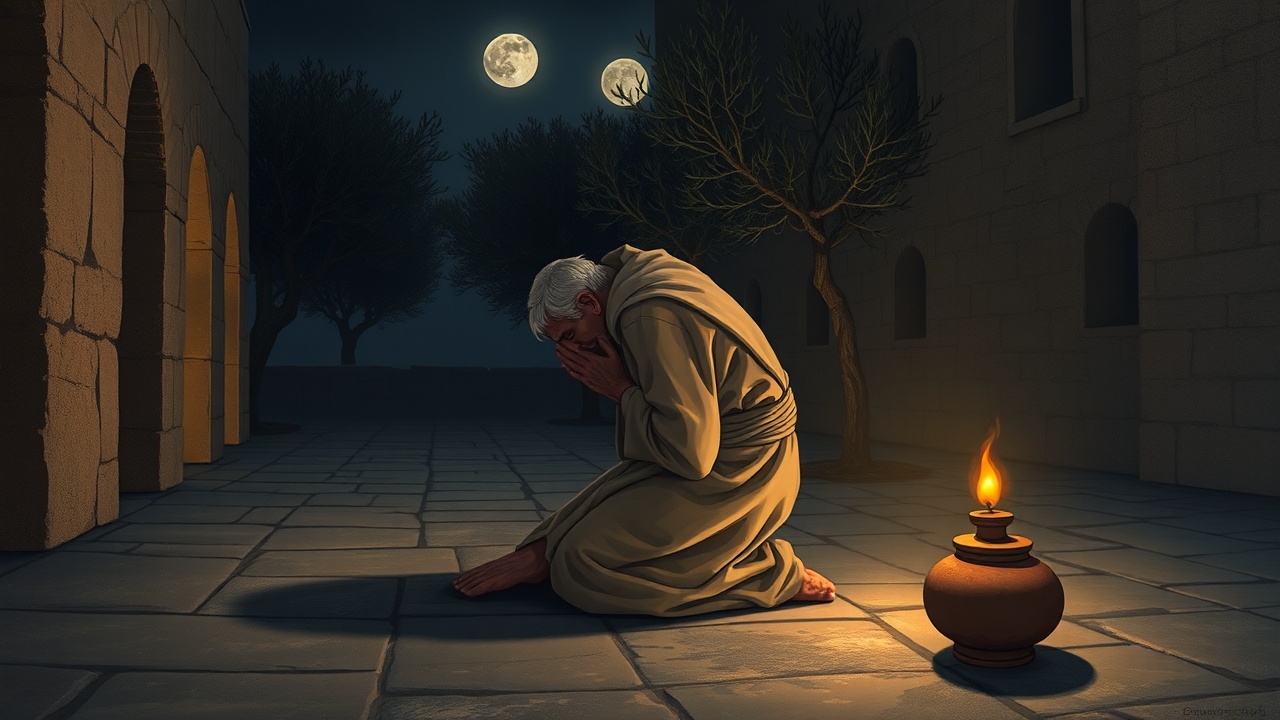
When Prayer Feels Hard: Doubt, Distraction, and Dry Seasons
Part of the Series: Prayer in Daily Life: Connecting with God in Every Moment
If you have ever sat down to pray and found your mind wandering to your grocery list, or knelt in desperation and felt only silence, or gone through a season where God seemed unreachably distant — you are in good company. Every honest person of faith has been there. The Psalms are full of it. The prophets cried out from it. Even the disciples, walking alongside Jesus in the flesh, fell asleep in the garden when he asked them to pray. Struggling in prayer does not mean you are failing at faith. It means you are human. This lesson is an invitation to look honestly at the obstacles we face in prayer — doubt, distraction, and spiritual dryness — and to discover what Scripture says about pressing through them into deeper communion with God.
Part One: When Doubt Creeps In
Doubt is perhaps the most quietly paralyzing obstacle to prayer. We wonder: Is anyone actually listening? Does this even matter? James addresses this directly, but not to shame us — rather to show us the way forward.
"If any of you lacks wisdom, let him ask God, who gives generously to all without reproach, and it will be given him. But let him ask in faith, with no doubting, for the one who doubts is like a wave of the sea that is driven and tossed by the wind."
— James 1:5–6 (ESV)
The word James uses for "doubting" (Greek: diakrino) carries the sense of being divided within oneself — pulled in two directions at once. James is not condemning honest questions; he is describing a heart that has not yet settled its trust in who God is. The antidote to doubt is not the absence of questions but the presence of anchored trust.
The father in Mark 9 gives us one of the most tender and honest prayers in all of Scripture. His son is tormented, and he comes to Jesus with a fractured faith:
"And Jesus said to him, 'If you can! All things are possible for one who believes.' Immediately the father of the child cried out and said, 'I believe; help my unbelief!'"
— Mark 9:23–24 (ESV)
Notice that Jesus did not turn away from this man's partial faith. He honored it. When doubt is present in your prayers, bring the doubt itself to God. "I believe; help my unbelief" may be one of the most powerful prayers you ever pray.
Part Two: When Distraction Scatters Our Attention
We live in the most distracted age in human history. Notifications, noise, and endless demands compete for our attention every waking moment. It is no surprise that sitting still before God feels nearly impossible. Yet Jesus, who lived in a far less distracted world, still had to be intentional about withdrawing to pray.
"But he would withdraw to desolate places and pray."
— Luke 5:16 (ESV)
The word "would" here indicates a consistent habit — a regular, deliberate practice. Jesus was not reacting to distraction; he was preemptively guarding against it by creating space. He also taught his disciples to do the same:
"But when you pray, go into your room and shut the door and pray to your Father who is in secret. And your Father who sees in secret will reward you."
— Matthew 6:6 (ESV)
"Shut the door" is not merely a physical instruction — it is a posture of the heart. It means deliberately closing out competing voices and turning our full attention toward the One who is always present. Distraction in prayer is not a moral failure; it is a call to gently return. Every time you notice your mind has wandered and you bring it back to God, that act of returning is itself a form of prayer.
Part Three: When the Well Runs Dry
Spiritual dryness — those seasons when prayer feels hollow, when Scripture seems flat, when God feels absent — is one of the most disorienting experiences a believer can face. Yet the Psalms, written by people who loved God deeply, are saturated with this experience.
"O God, you are my God; earnestly I seek you; my soul thirsts for you; my flesh faints for you, as in a dry and weary land where there is no water."
— Psalm 63:1 (ESV)
David does not pretend the dryness is not real. He names it — "a dry and weary land." But notice where he turns: toward God, not away. The very act of crying out in the desert is prayer. Dry seasons do not mean God has left; they often mean God is deepening our roots, teaching us to seek him for himself rather than for the feelings his presence produces.
The prophet Elijah experienced a profound spiritual collapse after his greatest moment of triumph. Exhausted and despairing, he asked to die. God's response was not rebuke but provision — rest, food, and a gentle voice:
"And after the earthquake a fire, but the Lord was not in the fire. And after the fire the sound of a low whisper."
— 1 Kings 19:12 (ESV)
In dry seasons, God is often speaking in a whisper rather than a shout. The discipline is learning to be still enough to hear it. Paul also reminds us that in our weakness, we are never praying alone:
"Likewise the Spirit helps us in our weakness. For we do not know what to pray for as we ought, but the Spirit himself intercedes for us with groanings too deep for words."
— Romans 8:26 (ESV)
When you do not have words, the Spirit has them for you. A dry season in prayer is not a season of prayerlessness — it is a season in which the Spirit carries what we cannot.
Reflection Questions
- Which of the three obstacles — doubt, distraction, or dryness — do you most commonly experience in your prayer life? What do you think lies beneath it?
- The father in Mark 9 prayed honestly about his own unbelief. What would it look like for you to bring your doubts to God rather than letting them keep you from praying?
- Jesus regularly withdrew to pray despite a full and demanding ministry. What "doors" might you need to shut — physically or mentally — to create more focused space for prayer?
- Have you ever experienced a dry season in prayer that eventually led to deeper faith? What did you learn about God — or yourself — in that season?
- Romans 8:26 promises that the Spirit intercedes for us when we don't know how to pray. How does this truth change the way you feel about seasons when prayer seems inadequate or wordless?
Practical Application
This week, choose one of the following practices based on the obstacle you most identified with:
- For doubt: Write the prayer "I believe; help my unbelief" at the top of a journal page. Beneath it, write one truth about God's character that you do believe, even when faith feels small. Return to it daily.
- For distraction: Choose one specific time and location for prayer this week — even ten minutes — and physically remove your phone from the room. Begin by sitting in silence for two minutes before speaking any words.
- For dryness: Pray one of the dry-season Psalms aloud each morning this week (try Psalms 42, 63, or 88). Let the psalmist's words become your own, and notice whether God meets you in the honesty of them.
Remember: the goal of prayer is not a feeling — it is a relationship. And relationships survive dry spells, honest doubts, and scattered conversations. Keep showing up. God is already there.