
The Lord's Prayer: A Blueprint for Daily Conversation with God
Learning to Pray: Patterns and Models • ~6 min read
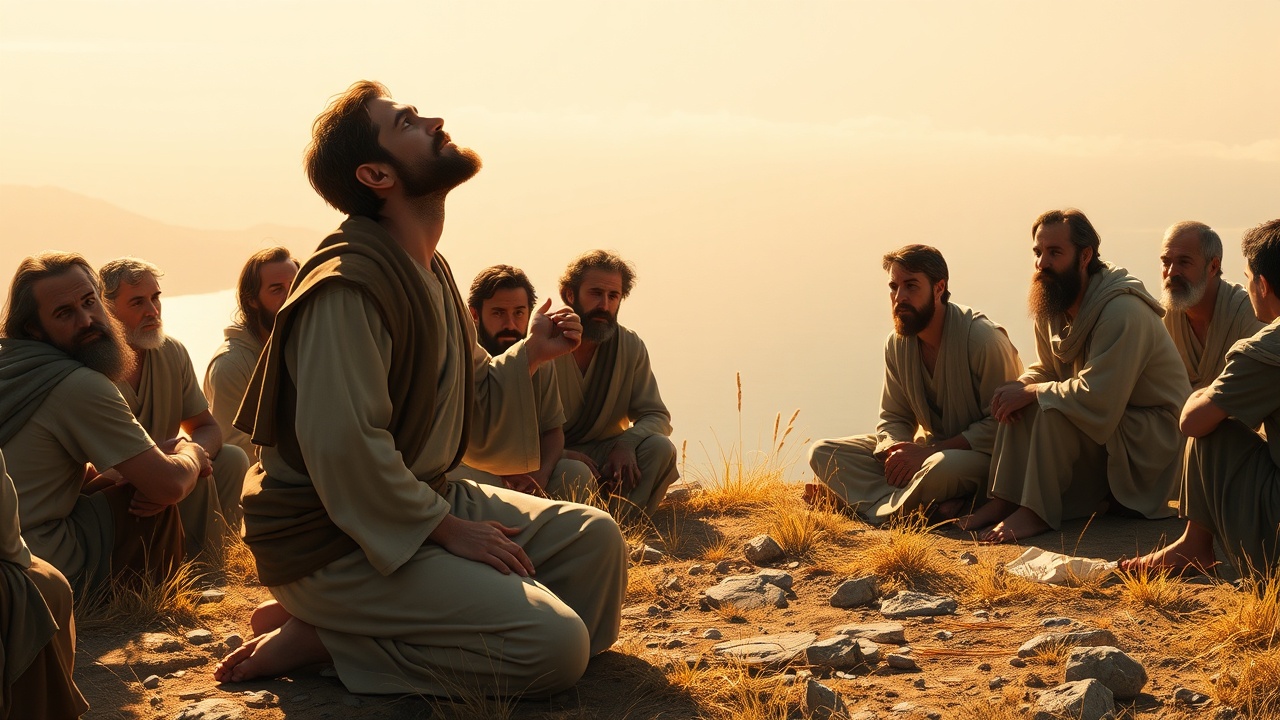
The Lord's Prayer: A Blueprint for Daily Conversation with God
Part of the series: Prayer in Daily Life: Connecting with God in Every Moment
Introduction
In a world overflowing with noise, distraction, and busyness, many of us long to pray but struggle to know where to begin. We sit down, close our eyes, and find ourselves either rambling without direction or staring into silence with nothing to say. Jesus understood this struggle. When His disciples came to Him and said, "Lord, teach us to pray," He did not hand them a theology textbook or a list of religious rituals. He gave them a prayer — a living, breathing model for daily conversation with God. Known as the Lord's Prayer, this short passage from Matthew 6 is not merely a recitation to be memorized; it is a blueprint, a framework that shapes the posture of our hearts every single day.
The Scripture: Matthew 6:9–13
"Pray then like this: 'Our Father in heaven, hallowed be your name. Your kingdom come, your will be done, on earth as it is in heaven. Give us this day our daily bread, and forgive us our debts, as we also have forgiven our debtors. And lead us not into temptation, but deliver us from evil.'"
— Matthew 6:9–13 (ESV)
Luke's parallel account records the disciples' request that prompted this teaching:
"Now Jesus was praying in a certain place, and when he finished, one of his disciples said to him, 'Lord, teach us to pray, as John taught his disciples.'"
— Luke 11:1 (ESV)
Teaching: Unpacking the Blueprint
1. "Our Father in Heaven" — Approaching God as a Child
The prayer does not begin with our needs. It begins with relationship. Jesus instructs us to address God as Father — the Aramaic word Abba, meaning an intimate, trusted parent. This is radical. In the ancient world, approaching a holy God with such familiarity was unthinkable. Yet Jesus swings the door wide open. Notice also the word our. Prayer is never purely private; it connects us to the whole family of God. Before we utter a single request, we are reminded of who we are and whose we are.
"For you did not receive the spirit of slavery to fall back into fear, but you have received the Spirit of adoption as sons, by whom we cry, 'Abba! Father!'"
— Romans 8:15 (ESV)
2. "Hallowed Be Your Name" — Beginning with Worship
Before petitions, before confessions, before requests — worship. To hallow God's name is to declare that He is holy, set apart, incomparably great. This phrase reorients our hearts. When we begin prayer by magnifying who God is, our problems find their proper size. Worship is not a warm-up act; it is the foundation upon which all true prayer is built.
"Ascribe to the Lord the glory due his name; worship the Lord in the splendor of holiness."
— Psalm 29:2 (ESV)
3. "Your Kingdom Come, Your Will Be Done" — Surrendering Our Agenda
This phrase is an act of surrender. We are praying that God's purposes — not our preferences — would prevail. It is the same spirit Jesus demonstrated in Gethsemane when He prayed, "Not my will, but yours, be done" (Luke 22:42). Daily prayer that includes this surrender transforms us over time. We stop using God as a means to our ends and begin aligning ourselves with His eternal purposes.
4. "Give Us This Day Our Daily Bread" — Trusting God for Present Needs
Notice the word daily. Jesus does not teach us to pray for a year's supply of bread, or even a week's worth. He teaches us to come to God each day, trusting Him for that day's provision. This echoes the manna in the wilderness — God provided exactly what was needed, exactly when it was needed (Exodus 16). Daily dependence is not a sign of weakness; it is the posture of faith.
"And my God will supply every need of yours according to his riches in glory in Christ Jesus."
— Philippians 4:19 (ESV)
5. "Forgive Us Our Debts, as We Also Have Forgiven" — Living in Grace and Extending It
This is the only petition in the Lord's Prayer that carries a condition. We are invited to receive forgiveness in the same measure that we extend it to others. This is not about earning God's grace — the cross has already secured our forgiveness. Rather, it is a recognition that a heart hardened toward others cannot fully receive what God offers. Daily prayer includes a daily examination: Is there someone I need to forgive today?
"Be kind to one another, tenderhearted, forgiving one another, as God in Christ forgave you."
— Ephesians 4:32 (ESV)
6. "Lead Us Not into Temptation, but Deliver Us from Evil" — Acknowledging Our Need for Protection
The prayer ends with an honest admission of vulnerability. We are not self-sufficient moral agents. We need God's guidance away from situations that would overwhelm us and His protection from the schemes of the enemy. This petition cultivates humility and vigilance. It is a daily reminder that the Christian life is not fought in our own strength.
"Be sober-minded; be watchful. Your adversary the devil prowls around like a roaring lion, seeking someone to devour."
— 1 Peter 5:8 (ESV)
The Shape of the Blueprint
When we step back and look at the whole prayer, a beautiful structure emerges. It moves from God's glory to God's kingdom to our daily needs to our relational health to our spiritual protection. It is comprehensive yet concise. It is deeply personal yet communal. It covers every dimension of human life — provision, forgiveness, relationship, and spiritual warfare — all anchored in the identity of a loving Father. This is why Christians across centuries and cultures have returned to these words again and again.
Reflection Questions
- When you pray, do you typically begin with worship or with requests? How might starting with "hallowed be your name" change the tone and direction of your daily prayers?
- What does it mean practically to pray "your will be done" in a situation where you desperately want a specific outcome? Can you think of a current circumstance where you need to surrender your agenda to God?
- Jesus teaches us to ask for daily bread. In what areas of your life are you tempted to rely on your own resources or plans rather than bringing your needs to God each day?
- Is there someone in your life you are finding it difficult to forgive? How does understanding the forgiveness you have received through Christ motivate — or challenge — you to extend forgiveness to others?
- The prayer asks God to "deliver us from evil." What spiritual disciplines or habits help you remain alert to temptation and dependent on God's protection in your daily life?
Practical Application
This week, use the Lord's Prayer as a daily framework rather than a rote recitation. Each morning, work through each section slowly and personally. Begin by speaking aloud something true and great about God (hallowing His name). Then surrender one specific area of your day to His will. Bring one concrete need before Him. Name anyone you need to forgive and ask for the grace to do so. Finally, ask Him to guard your heart and mind against the specific temptations you know you will face that day. Keep a simple journal to record how this structured approach shapes your awareness of God throughout your daily moments.